Is Your Chimney Trying to Warn You? Decoding Cracks, Leaning, and White Stains
Your chimney stands as a silent guardian for your home. It’s a prominent feature, dutifully venting smoke and fumes, but it’s often overlooked until a problem becomes too obvious—and expensive—to ignore. Like any critical part of your home's structure, your chimney communicates its health through subtle and not-so-subtle signs. Ignoring these warnings can lead to significant structural damage, water leaks, and even fire hazards.
Are you seeing fine lines spreading across the mortar? Does the entire structure seem to be tilting slightly? Have you noticed a chalky white substance appearing on the bricks? These aren't just cosmetic blemishes; they are your chimney's way of crying out for help. Here at Select Chimney Services, we believe that understanding these signals is the first step toward protecting your home and family. This comprehensive guide will help you decode what your chimney is trying to tell you about its condition.
The Silent Communicator: Why Chimney Health is Structural Health
Before we dive into the specific warning signs, it's crucial to understand the role your chimney plays. It's not just a flue for your fireplace. A masonry chimney is an incredibly heavy, complex structure that is integrated with your home's foundation and roofline. Its stability is paramount to the overall integrity of your house.
A compromised chimney can lead to a cascade of problems:
- Water Intrusion: Cracks and gaps are open invitations for rain and melting snow. This moisture can seep into your attic, walls, and ceilings, causing rot, mold, and costly water damage.
- Structural Failure: A leaning or severely cracked chimney is at risk of partial or total collapse, which could damage your roof, your property, or even cause injury.
- Fire Hazards: Cracks in the flue liner or masonry can allow intense heat and embers to escape into the combustible parts of your home's structure, creating a serious fire risk.
- Carbon Monoxide Leaks: A properly functioning chimney safely vents dangerous gases, including carbon monoxide. Blockages or structural failures can cause these deadly fumes to back up into your home.
By learning to spot the early warnings, you can address issues while they are still manageable. Let's break down the three most common—and critical—signs of chimney distress.
Decoding the Cracks: What Different Fissures Mean
Cracks are perhaps the most common sign of chimney trouble, but not all cracks are created equal. Their size, location, and pattern can tell a detailed story about the underlying problem. Ignoring them is like ignoring a check engine light—the problem will only get worse.
Hairline Cracks in Mortar Joints
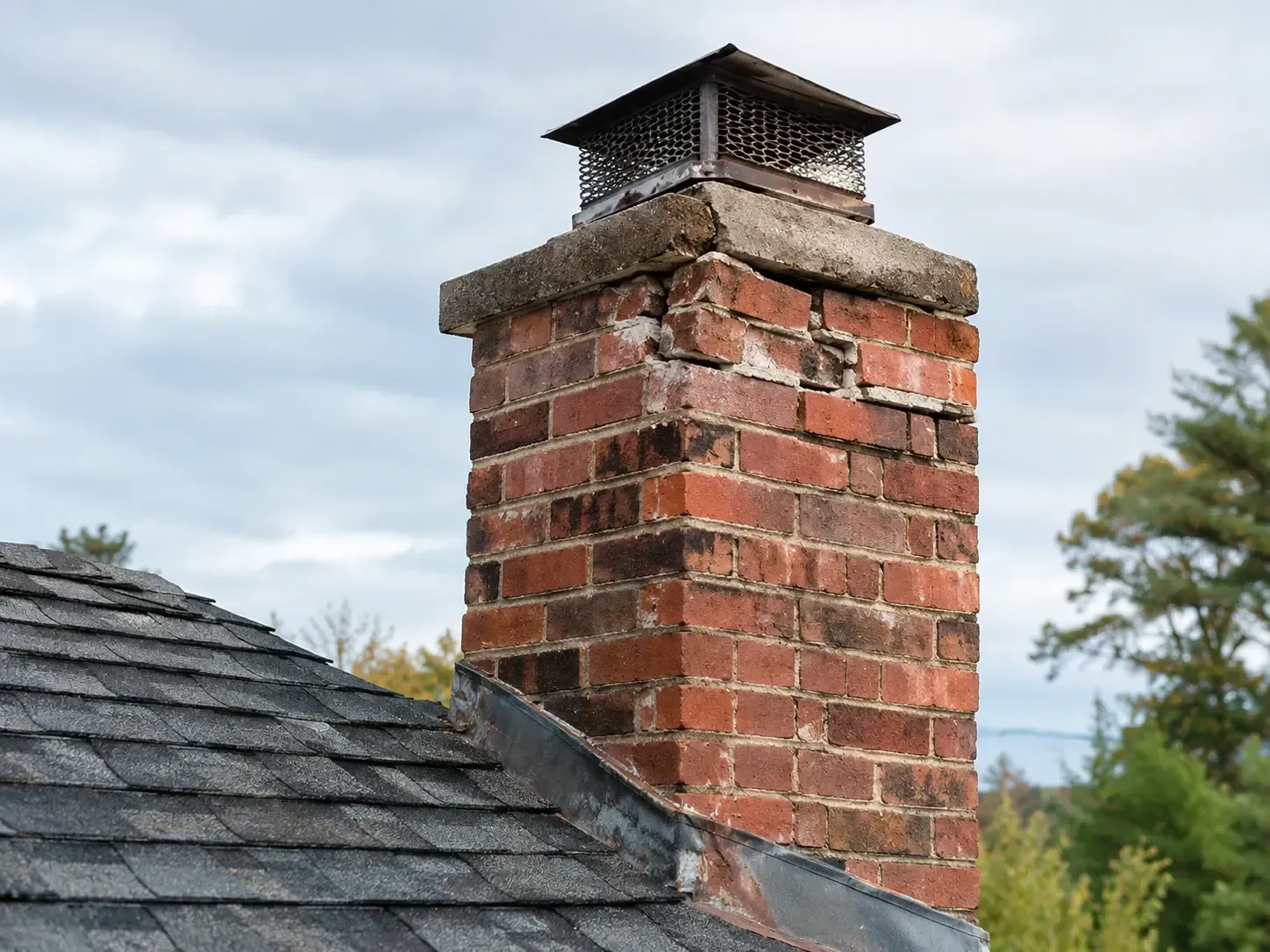
These are thin, spidery cracks found in the mortar between the bricks. While they may seem minor, they are the first sign of moisture-related deterioration. Mortar is designed to be the sacrificial element of the chimney, absorbing the brunt of weather and temperature changes. Over time, it naturally breaks down. If left unaddressed, these small cracks will widen, allowing more water to penetrate, freeze, and expand, accelerating the damage in a process known as the freeze-thaw cycle.
Vertical Cracks in Bricks and Masonry
When you see long, vertical cracks running through the bricks themselves, it signals a more serious issue. This often indicates excessive stress on the structure. Common causes include rapid temperature changes (thermal shock) from a chimney fire, settling of the house, or significant water damage that has compromised the integrity of the bricks. These cracks are direct pathways for water and must be evaluated by a professional immediately.
Stairstep Cracks
Stairstep cracks, which follow the mortar lines in a jagged, upward pattern, are one of the most alarming signs. This type of cracking is a classic indicator that the chimney's footing or the home's foundation is shifting or failing. The chimney is literally being pulled apart from the house. This is a severe structural problem that requires urgent attention from both a chimney specialist and potentially a foundation expert. The stability of the entire structure is at risk.
Cracks in the Chimney Crown
The chimney crown is the concrete or mortar slab at the very top of your chimney, designed to shed water away from the flue opening. It's your chimney's first line of defense against the elements. Due to its direct exposure, it often develops cracks. Even small fissures can allow water to seep down between the flue liner and the brickwork, causing hidden, internal damage that can rot the chimney from the inside out. A properly constructed crown should have an overhang to direct water away effectively.
The Leaning Tower of... Your House? The Dangers of a Tilting Chimney
A leaning chimney is an undeniable, urgent warning sign. If you can see with your naked eye that your chimney is tilting away from your house, the time for observation is over—it's time for immediate action. A leaning chimney is a gravitational accident waiting to happen.
Several critical issues can cause a chimney to lean:
- Foundation Problems: The most common cause is a faulty footing. The massive weight of a chimney requires a substantial, properly laid concrete footing deep in the ground. If the footing was undersized, poured on unstable soil, or has deteriorated, it can no longer support the chimney's weight, causing it to sink and tilt.
- Soil Settlement: Changes in the soil around your home, caused by erosion, underground water, or decomposition of organic material, can lead to the ground shifting beneath the chimney's footing.
- Sulfate Attack: Over time, sulfates in the soil can react with the concrete footing, causing it to degrade and crumble, losing its structural strength.
- Missing Wall Ties: During construction, metal ties are supposed to be embedded in the mortar to secure the chimney to the house's frame. If these were omitted, installed incorrectly, or have rusted away, the chimney can begin to pull away from the house.
A leaning chimney is a liability. It can collapse without warning, destroying your roof and anything or anyone below it. Our team at Select Chimney Services has the expertise to assess the cause of the lean and determine the safest, most effective solution, which may involve specialized support piers or a complete rebuild.
What Are Those White Stains? Unmasking Efflorescence
Have you noticed a chalky, white, crystalline powder appearing on the surface of your chimney's bricks? This substance is called efflorescence. While it might look like paint residue or mold, it's actually a deposit of natural salts left behind as water evaporates from the masonry.
Many homeowners dismiss efflorescence as a simple cosmetic issue, but it's a clear indicator of a moisture problem. For efflorescence to occur, three conditions must be met: there must be water-soluble salts within the bricks or mortar, there must be moisture to dissolve those salts, and there must be a path for the salt-laden water to travel to the surface. The white stain is the evidence left behind when the water evaporates.
Therefore, efflorescence is a symptom of water penetration. The source could be a cracked crown, failing mortar joints, a leaky flashing, or even porous bricks that lack proper waterproofing. If the underlying moisture issue isn't resolved, the problem will persist and lead to more severe damage, including spalling—a condition where the face of the brick flakes or breaks off, permanently damaging the masonry.
When to Watch and When to Act: A Homeowner's Guide
It can be difficult for a homeowner to gauge the severity of these issues. This table provides a general guide, but a professional inspection is always the best course of action for an accurate diagnosis.
| Symptom | Severity Level | Recommended Action |
|---|---|---|
| Faint white stains (efflorescence) that appear after heavy rain and disappear. | Low | Monitor the area. Consider applying a water repellent. If it becomes persistent, schedule an inspection to find the moisture source. |
| Hairline cracks in a few mortar joints. | Moderate | This is a sign of aging. Plan for tuckpointing or repointing in the near future to prevent further water entry. |
| Persistent or heavy efflorescence. | Moderate to High | This indicates a significant and ongoing moisture problem. A professional inspection is needed to locate and repair the water leak. |
| Cracked or crumbling chimney crown. | High | This is a primary entry point for water. The crown should be repaired or rebuilt as soon as possible to prevent extensive internal damage. |
| Vertical cracks through bricks or stairstep cracks in mortar. | Severe | This signals a serious structural issue. Cease using the fireplace immediately and contact a certified chimney professional for an urgent evaluation. |
| Any visible leaning or tilting of the chimney. | Critical | This is an emergency. The structure is unstable and at risk of collapse. Contact a professional immediately to secure the area and assess the foundation. |
The Proactive Approach: Prevention and Maintenance
The best way to deal with chimney problems is to prevent them. Regular, proactive maintenance is far less expensive and disruptive than a major structural repair or rebuild. The National Fire Protection Association (NFPA) recommends an annual inspection of all chimneys, flues, and vents.
A professional inspection from a company like Select Chimney Services can identify and address minor issues before they escalate. Key preventative measures include:
- Waterproofing: Applying a vapor-permeable water repellent can prevent water from soaking into the masonry while still allowing the chimney to breathe.
- Crown Repair: Sealing cracks or rebuilding a deteriorating crown is essential to keep water out.
- Tuckpointing: This process involves grinding out old, failed mortar joints and replacing them with new mortar to restore the structural integrity and weather resistance of your chimney.
- Flashing Repair: Ensuring the metal flashing where the chimney meets the roof is sealed and intact is critical for preventing roof leaks.
Conclusion: Your Chimney Needs a Voice
Your chimney may be silent, but it speaks volumes about its condition through cracks, leans, and stains. By learning to interpret these signs, you can take control of your home's safety and structural integrity. Don't wait for a small crack to become a leaning tower or for a little moisture to cause a major rebuild. Be proactive. If you've noticed any of the warning signs discussed in this article, it's time to listen to what your chimney is telling you.
Protect your investment and ensure your family's safety. Contact Select Chimney Services today for a comprehensive inspection. Our certified experts will provide a thorough evaluation and a clear, honest plan to keep your chimney standing strong and safe for years to come.
Frequently Asked Questions
How often should I have my chimney inspected?
The National Fire Protection Association (NFPA) Standard 211 says, "Chimneys, fireplaces, and vents shall be inspected at least once a year for soundness, freedom from deposits, and correct clearances." This annual inspection is crucial for catching problems like cracks or water damage early.
Is efflorescence (the white stain) dangerous to my family's health?
No, efflorescence itself is a harmless salt deposit and poses no direct health risk. However, it is a definitive sign of excess moisture inside your masonry, which can lead to the growth of mold and mildew. It's the underlying moisture and potential for mold that can be a health concern, not the salt stain itself.
Can I repair small mortar cracks myself?
While DIY patch kits are available, chimney repair is often more complex than it appears. Using the wrong type of mortar can cause more harm than good, as it may trap moisture or have a different thermal expansion rate than the original materials, leading to further cracking. For a lasting and safe repair, it's always best to consult a professional who can properly match the mortar and address the root cause of the cracking.
What's the difference between repointing and tuckpointing?
Both terms refer to repairing mortar joints, and they are often used interchangeably. Technically, repointing is the process of grinding out and replacing failing mortar. Tuckpointing is a more specific method where two different colors of mortar are used to create the illusion of very fine, neat joints—one color matches the bricks, and a thin line of a contrasting color is 'tucked' in the center. In practice, most chimney repair work is repointing.